
In the world of precision manufacturing, choosing the right fabrication process is critical. Two of the most common yet distinct methods for producing metal components are Metal Injection Molding (MIM) and Stamping.
Metal Injection Molding (MIM)
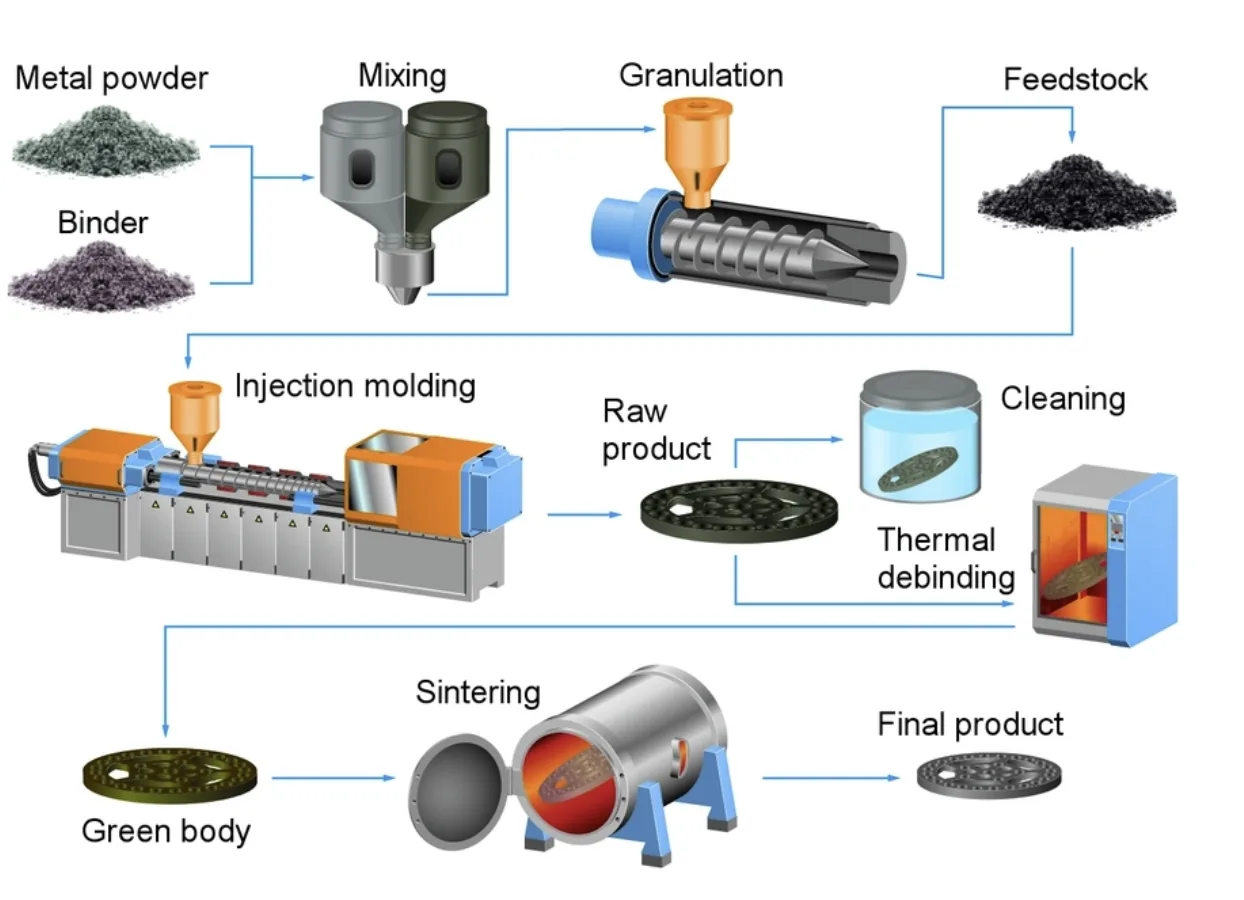
MIM combines the design flexibility of plastic injection molding with the material strength of metal. Fine metal powders are mixed with a binder to create a feedstock, injected into a mold cavity, debinded, and sintered at high temperature to form a dense metal component. Best for small, extremely complex, three-dimensional geometries, with very high material utilization.
Metal Stamping
Stamping is a cold-forming process that uses a press and dies to transform flat metal sheets into shapes through punching, blanking, bending, and coining. Best for two-dimensional or shallow 3D parts such as brackets, terminals, and shields. Modern stamping presses can produce hundreds of parts per minute.
Key Differences
MIM offers extremely high complexity (3D shapes, undercuts, internal threads) with wall thickness from 0.3mm to 5mm and tight tolerance (plus or minus 0.3% to 0.5%), but slower cycle time. Stamping offers moderate complexity, very fast cycle time (milliseconds per stroke), but is limited by sheet thickness and generates more scrap.
Summary
Choose MIM when your part is small (usually under 100 grams), highly complex, and requires high strength without extensive post-processing. Choose Stamping when you need high-speed production of flat or relatively simple formed parts where cost-per-unit and structural speed are the priorities.