
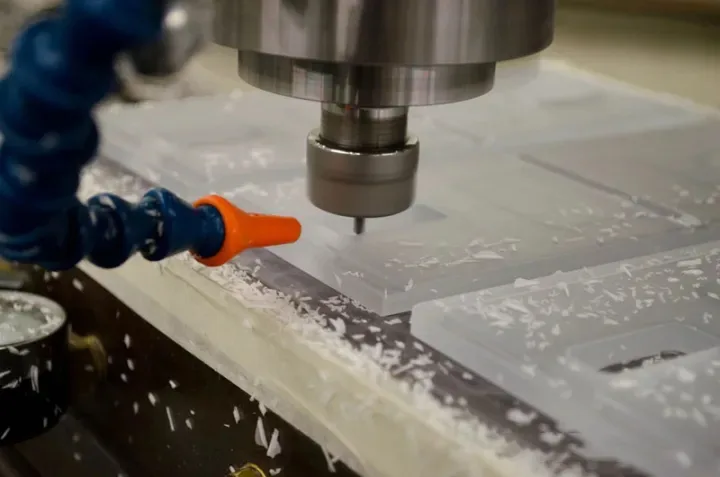
POM (Polyoxymethylene), also known as Acetal, is a high-performance engineering plastic widely used in CNC machining. From the perspective of CNC engineers, POM is one of the most machining-friendly plastics available, with mechanical behavior during cutting often described as metal-like.
Core Material Properties
- High rigidity and high crystallinity – stable cutting behavior with minimal vibration
- Low friction coefficient – ideal for gears and sliding parts
- Excellent dimensional stability – tight tolerances are easier to achieve
- Low moisture absorption – less post-machining deformation
- Self-lubricating properties – can replace certain metal parts
Important Limitations
POM is not resistant to strong acids or strong oxidizing environments, and its thermal stability decreases above approximately 100 degrees Celsius, so continuous high-temperature environments should be avoided.
Common CNC Applications
Precision gears, bushings and sleeves, sliding blocks, rollers and pulleys, locating pins, fixtures and jigs, pneumatic component accessories, and structural support components in semiconductor and electronics equipment.
Key Machining Considerations
Carbide cutting tools with sharp edges and positive rake angles are recommended. POM machines efficiently at high spindle speed and medium to high feed rate, and dry machining is usually possible. Typical achievable tolerances are plus or minus 0.02mm for standard parts and plus or minus 0.01mm for high-precision components.
Conclusion
POM often represents the perfect balance between performance, machinability, and cost efficiency, especially when replacing metal parts in sliding or mechanical assemblies.